The August 2026 Sentinel ShiftsGo release gives supervisors faster exception visibility and gives scheduling teams more room to model how coverage actually works in the field.
Several improvements are now live across scheduling and live operations. Together, they help security companies spot missed shifts sooner, run patrol rounds more accurately, split one shift between multiple officers, tune attendance windows to match contract terms, and keep live coverage alerts focused on what still needs attention.
- Missed shifts are flagged sooner while late arrivals can still be recorded correctly.
- Patrol rounds can repeat inside a single shift without creating separate shifts for every round.
- One shift can be split between officers with cleaner handover and attendance tracking.
- Attendance timing can be configured around your contract and operating procedures.
- The live coverage feed now keeps open exceptions easier to find.
01
Missed shifts spotted sooner
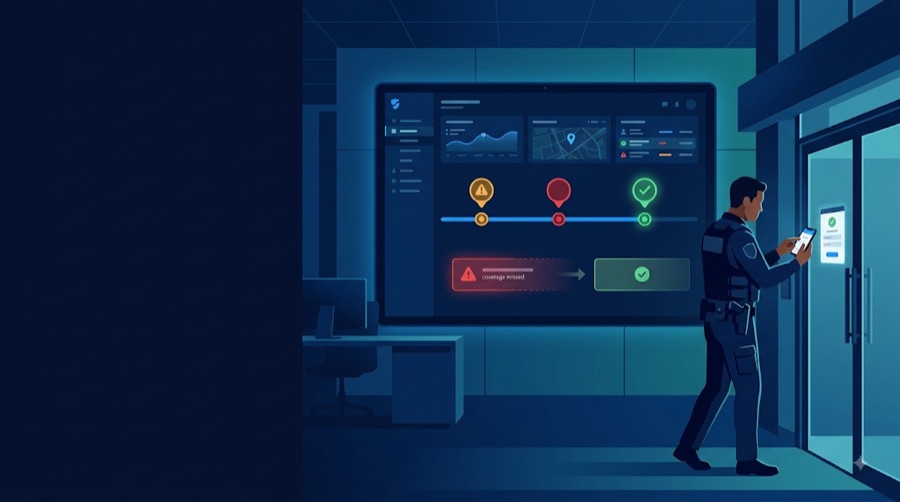
If an officer has not checked in by the time you allow, ShiftsGo marks the shift as missed and tells the operations team straight away.
If the officer arrives before the shift ends they can still check in. The arrival is recorded as late, coverage updates, and the alert closes itself. You see potential gaps earlier without penalizing a genuine late start.
02
Patrol rounds that repeat inside one shift
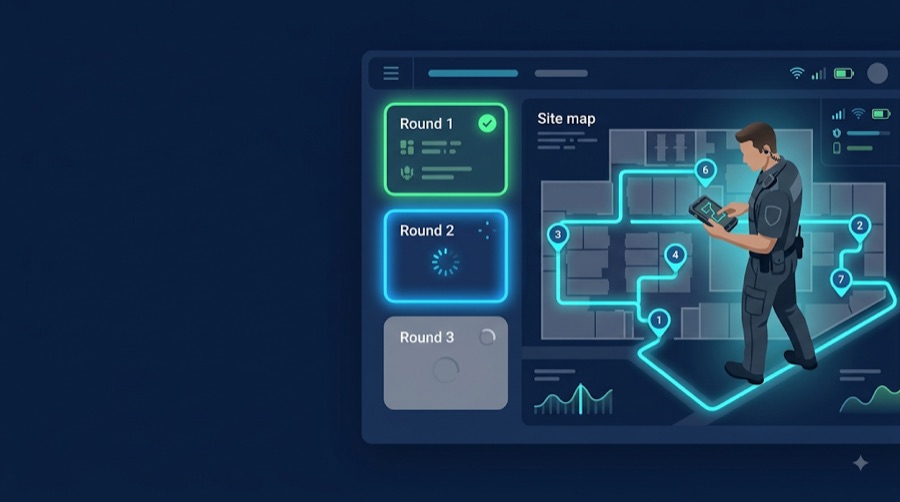
Set how many times a route should be walked during a shift, and ShiftsGo tracks each round on its own.
Supervisors see which round is running, which checkpoints are outstanding, and who started each one. Recurring patrol obligations become easier to run and easier to evidence, with no need to build a separate shift for every round.
03
One shift, more than one officer
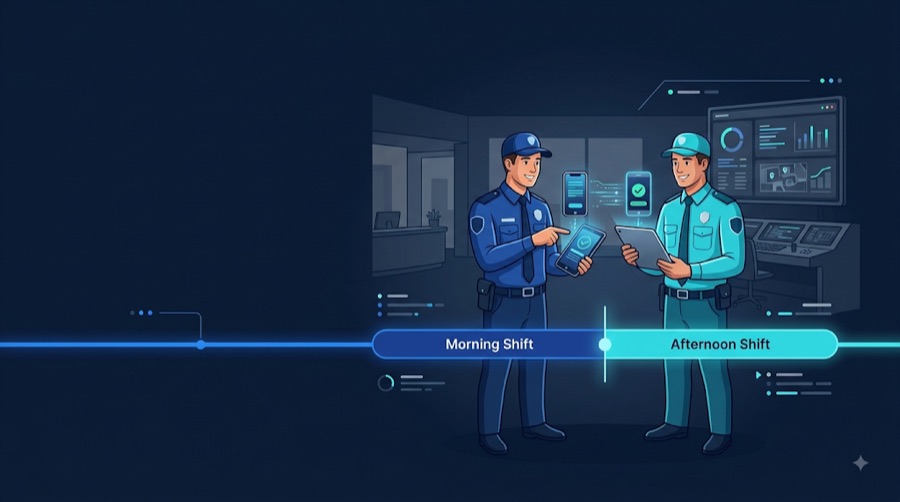
A shift can be split between officers — a morning and an afternoon, for example. Check-in, no-show detection, tracking, reminders, and attendance all follow each officer’s own hours rather than the whole shift.
Handovers stay clean, attendance reporting stays accurate, and split coverage stops producing misleading alerts.
04
Attendance timing on your terms
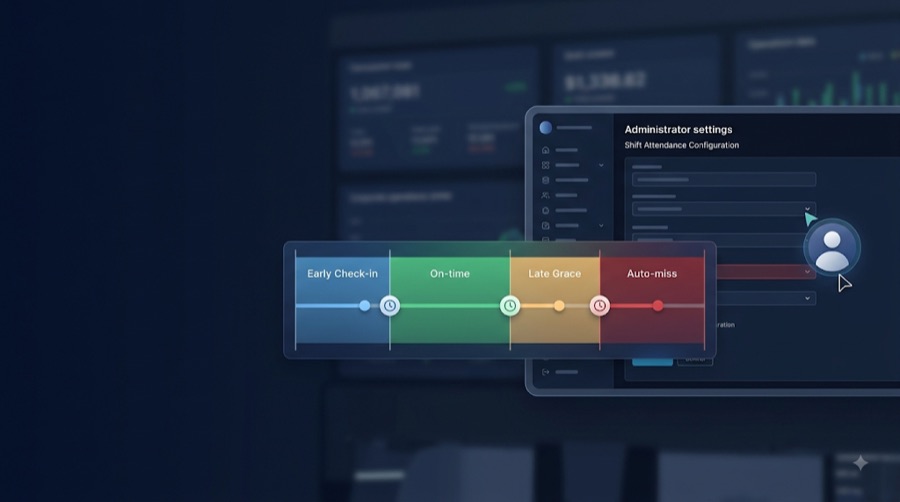
You decide how early an officer can check in, when an arrival counts as late, when an overdue alert fires, when a shift is marked missed, and how long check-out stays open.
Set it once to match your procedures and contract terms. Early and late check-ins stay clearly flagged, so an acceptable variation never looks like a coverage failure.
05
A live view of what needs attention
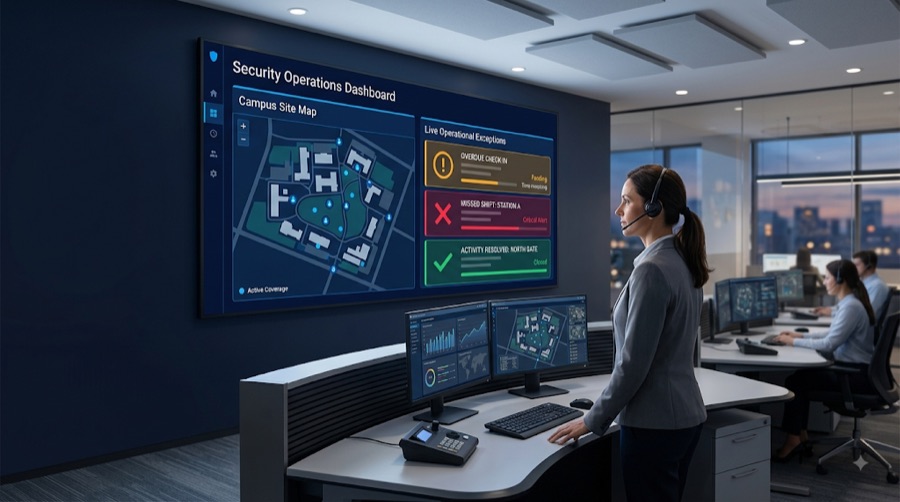
The coverage feed now shows exceptions shift by shift: who is overdue, what has been marked missed, the duty window involved, and whether the alert is still open.
When an officer recovers a missed shift with a permitted late check-in, the alert is acknowledged automatically — so what stays on screen is what still needs you.
Why this matters for contract coverage
Security operations are rarely perfect. A useful system should not simply paint every post green; it should show when the contract is covered, when supply is short, when a shift has become uncovered, and when an upcoming contract change takes effect. These updates make those states easier to see while keeping the operational record tied to the shift, officer, post, and patrol proof behind it.
Use this release to review your operation
- Review when a shift becomes late or missed.
- Confirm recurring patrol rounds match the visits promised to the client.
- Use officer segments for split coverage instead of creating misleading duplicate shifts.
- Watch the coverage feed for exceptions that still need supervisor action.
Need help setting this up?
Existing ShiftsGo customers can contact [email protected] for help reviewing attendance settings or setting up recurring patrol rounds. New to ShiftsGo? Book a walkthrough and see the console configured around your own sites, posts, and coverage expectations.